
info@agartha.academy

Need Help? call us
00201011609810
Reflexology - Acupressure (Tcm)
-
 Teacher
Batoul Abdulmalek
-
Category
Chinese Medicine (TCM)
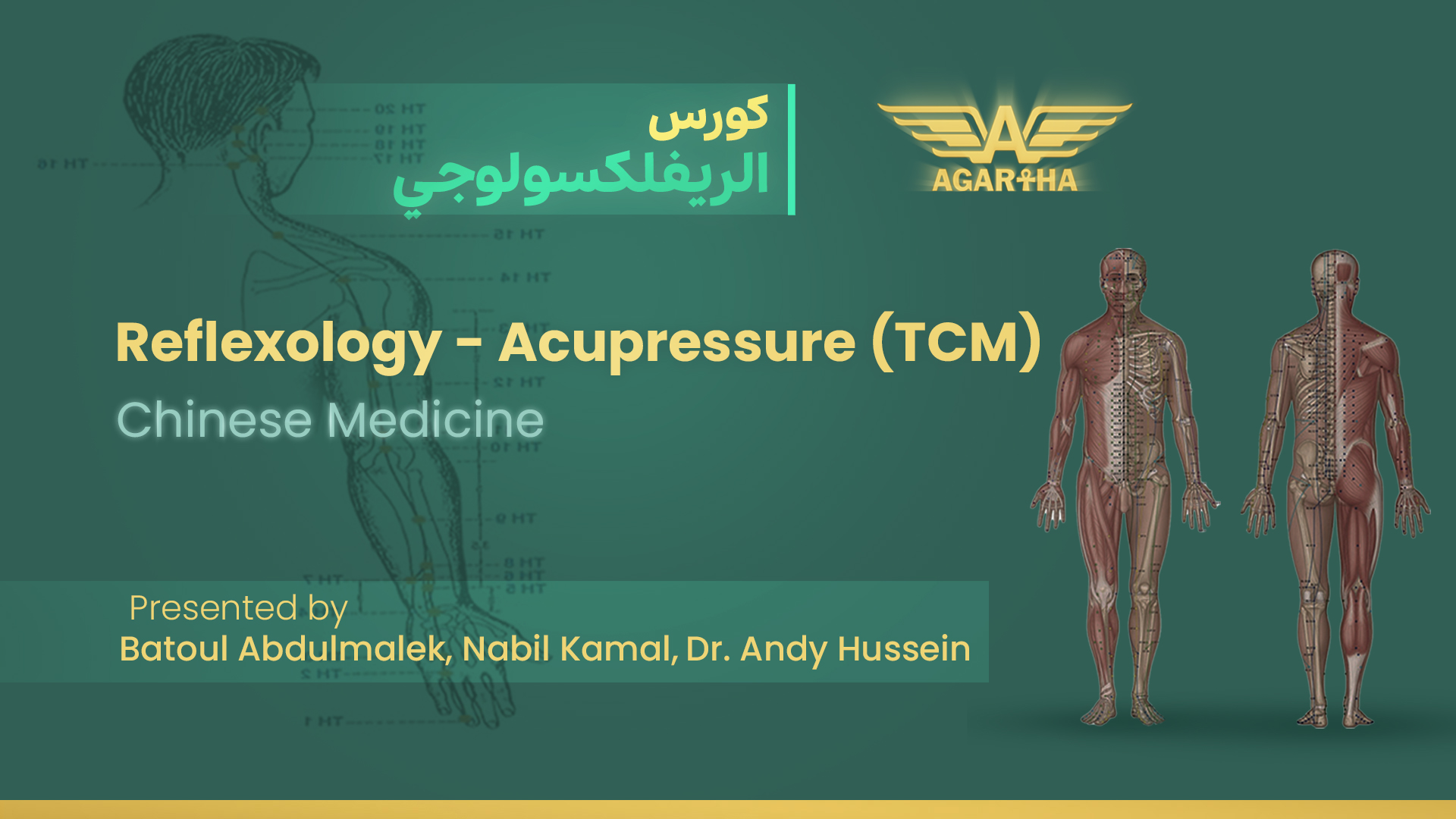
Reflexology Course - Acupressure
Principles of Chinese Medicine - Points Reflexology
Chapter 1 - Reflexology
-
Definition of reflexology.
-
Types of reflexology.
-
Levels of reflexology.
-
Fundamental elements of reflexology therapy (physical, auricular, ocular).
Chapter 2 - Anatomical Principles
-
Introduction to anatomy.
-
Functions of major body organs.
-
The nervous system.
-
Anatomy of the skin.
Chapter 3 - Characteristics of Reflexology Points
-
Methods of locating reflexology points.
-
Anatomical lines.
-
Energy circulation in the body.
-
Types of reflexology points.
Chapter 4 - Meridians
-
Classification of meridians.
-
Major body meridians:
-
Lung meridian
-
Large intestine meridian
-
Stomach meridian
-
Spleen-pancreas meridian
-
Heart meridian
-
Small intestine meridian
-
Bladder meridian
-
Kidney meridian
-
Pericardium meridian
-
Triple Warmer meridian
-
Gallbladder meridian
-
Liver meridian
-
Chapter 5 - Principles of Treatment
-
Components and properties of pain.
-
Neural mechanisms governing pain.
-
Stimulation criteria in reflexology therapy.
-
Classical reflexology treatment principles for pain.
Course Objectives:
-
Provide a foundational understanding of reflexology:
-
Define reflexology and its types and levels.
-
Explain the fundamental elements of reflexology therapy, including physical, auricular, and ocular.
-
Introduce students to the principles of anatomy and the basic functions of body organs, the nervous system, and the skin.
-
Enable students to identify and apply treatment to reflexology points:
-
Train students to accurately locate reflexology points using anatomical lines.
-
Explain the concept of energy circulation in the body and the types of reflexology points.
-
Provide detailed information about the various meridians in the body and their functions.
-
Equip students with therapeutic skills in Chinese medicine:
-
Explain the components of pain and its neural mechanisms.
-
Determine appropriate stimulation criteria in reflexology therapy.
-
Present classical therapeutic principles for pain using reflexology points.
-
Health prevention:
-
The course aims to provide students with the knowledge necessary to understand how the body works and how to maintain health.
-
By understanding meridians and their functions, students can learn about the body's energy balance and how to maintain it, contributing to the prevention of many diseases.
-
Reflexology therapy can be used as an auxiliary tool to promote general health and improve immunity.
Important Note: Reflexology therapy is not a substitute for medical diagnosis.
-
For further inquiries: Please contact our sales team via WhatsApp or Telegram
-
Join our communities for the latest news, discussions, and updates:
Our WhatsApp Channel & Our Telegram channel
Reflexology - Acupressure (Tcm)
Student Reviews
Leave A Comment
Student Comments
NO comment
Course Features
- Duration : 00:00:00
- Lectures : 1
- Quizzes : 0
- Students : 1
Leave a Comment